Punishment
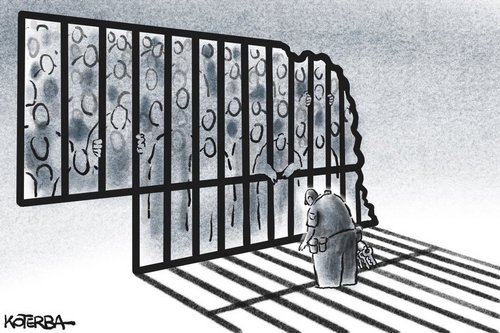
The recent government policy of releasing prisoners early in order to relieve prison overcrowding has not only caused anger in some quarters but has also raised the issue of what punishment is actually for. Do we undermine justice by reducing the suffering experienced by prisoners?
The prospect of the early release of Albert Bowers and Jessie Cole, who were convicted of the manslaughter of PC Andrew Harper in 2019, has provoked an unusually strong reaction both from the public, who have presented a petition of over a million signatures, and the Police Federation.
Are the objectors expressing a primitive desire for revenge, wanting to see justice done, or fearful of the consequences of downplaying the seriousness of the crime?
The controversy raises the question of what punishment is for and what value it has.
What is the point of punishment?
We generally accept that people who commit serious wrongs should be punished, yet punishment deliberately inflicts suffering, deprivation or hardship on a person. In most circumstances, deliberately harming another person would itself be considered wrong. The central question is therefore how such harm can be morally justified when imposed by a legal authority.
Retribution vs Consequences
The main debate is between retributive and consequentialist theories of punishment.
Retributivists argue that punishment is justified because wrongdoers deserve a proportionate response to their wrongdoing. Punishment is therefore primarily concerned with justice and desert, rather than with producing future benefits.
Consequentialists, by contrast, maintain that punishment can only be justified by its beneficial consequences, such as deterrence, incapacitation, rehabilitation or the protection of society. This raises a fundamental question: should punishment be imposed because someone deserves it, even when no useful consequence will result, or is suffering only justified when it produces some further benefit?
Closely related is the distinction between punishment and revenge. Both involve responding to wrongdoing by causing suffering, but revenge is normally a personal response, whereas punishment is an institutional response governed by law and due process. The state attempts to replace private retaliation with an impartial system of justice. Nevertheless, the fact that punishment is administered by the state does not, by itself, establish that it is morally justified.
Proportionality is another central issue. Even if offenders deserve punishment, how severe should it be? What determines whether imprisonment, a fine, community service or another penalty is appropriate? The seriousness of an offence, the offender's intentions, circumstances and degree of responsibility all appear relevant, but there is no simple method of determining the precise punishment deserved.
Punishment also serves several possible purposes. It may deter crime, incapacitate dangerous offenders, rehabilitate criminals, protect the public, express society's condemnation of wrongdoing or affirm the rights of victims. These purposes can conflict, particularly when a punishment that seems deserved is unlikely to produce any useful future consequence.
Finally, punishment raises questions about state power and responsibility. Since the state possesses considerable coercive power, safeguards are needed against wrongful convictions, excessive sentences and inhumane treatment.
At the same time, punishment presupposes that individuals are responsible for their actions. Understanding how behaviour is influenced by upbringing, circumstances and psychological factors therefore raises difficult questions about free will, responsibility and desert.
The philosophy of punishment consequently asks not simply whether punishment works, but whether it is just, what makes a punishment deserved and proportionate, what purposes it should serve, and when the deliberate infliction of suffering upon a wrongdoer can be morally justified.
More...
● Public Response to early release of PC Andrew Harper's killers
● The manslaughter of PC Andrew Harper 2019
● Early Release Policy to Relieve Pressure on Prison Places
● The Six Functions of Punishment
● Justifying Punishment
● The Injustice of Punitive Justice
● A Justification of Retributive Justice
● Revenge vs Justice
● Vengeance vs Revenge
● How can we Justify Punishment?
● Does Prison Work?
● Prison is a Bargain
● From Dignity to Degradation
● Prison and Degradation
● What are the Alternatives to Prison?
● The American Death Penalty